20 - 10 - 2025
From October 1–15, 2025, we at www.birdingtourscolombia.com embarked on a rewarding private birding tour in southern Colombia, exploring the Putumayo region and the southernmost tip of the Eastern Andes in Huila Department, where a wealth of unique and range-restricted bird species can be found. This custom Colombia birding trip itinerary for Judy Harackiewicz and Cliff Thurber from Madison, Wisconsin (USA), was focused on observing new life birds and enjoying any primate encounters that would bring delight to Judy & Cliff during the journey.
Dates: October 1 – 15, 2025
Total Species: 372
Complete eBird trip report: https://ebird.org/tripreport/434734
Our adventure began on the western slope of the Eastern Andes, in the scenic municipality of Palestina, Huila, where we explored the premontane forests at El Encanto Lodge and Drymophila Nature Reserve owned by the Molina family. These sites are home to a wonderful diversity of Andean tanagers, antpittas, and hummingbirds, making it a perfect start for any Colombia hummingbird tour.
As our itinerary progressed, we continued southward and downslope toward the Amazon Basin, following the transition from cool Andean forest to humid Amazonian foothill habitats. We spent productive time birding at the Discosura Birding Center, a hotspot known for the exceptional hummingbird diversity and mixed-species flocks. The diversity of birds in this transition zone, where Andean and Amazonian ecosystems meet, makes it one of the most fascinating regions for birdwatching in Colombia.
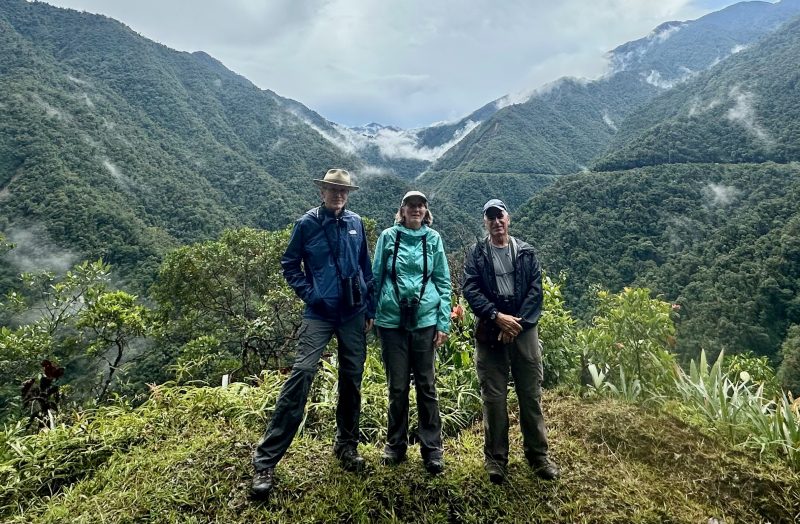
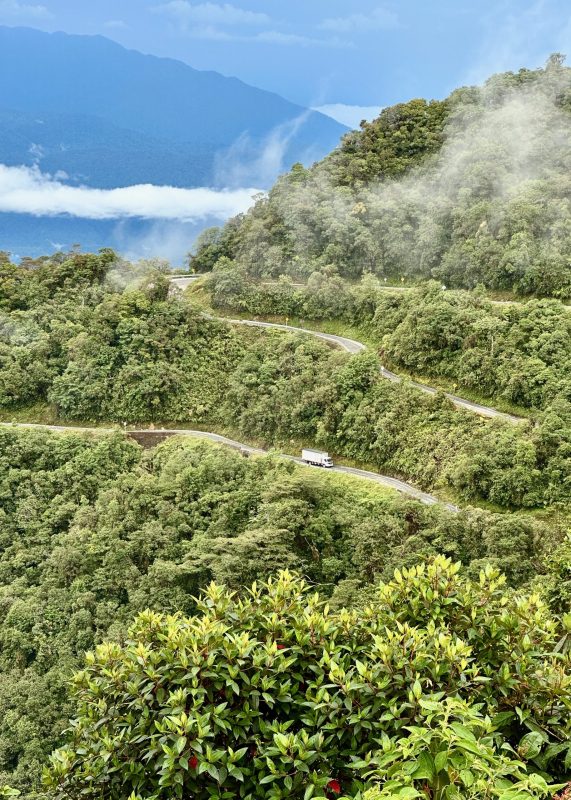
One of the most memorable parts of our journey was visiting the legendary Trampolín de las Aves, a winding mountain road famous among birders for its breathtaking scenery and incredible bird diversity. This steep route leads toward the Colombian Massif, an immense uplift of the Andes where the mountains broaden before splitting into three distinct ranges: the Eastern, Central, and Western Cordilleras.
This geological formation is not only dramatic in its landscapes but also fundamental to Colombia’s extraordinary biodiversity. The complex topography created by the separation of the Andes has given rise to countless microhabitats and endemic species, making Colombia the most bird-rich country on Earth.
Colombia Birdwatching Tours: Lowland Forests of the Amazon Basin
The second half of our journey focused on exploring the lowland Amazonian forests near Puerto Asís and along the mighty Putumayo River, one of the principal tributaries of the Amazon River. Our birding efforts took us through El Escondite Nature Reserve, Hojarasca Center, Playa Rica, and the Boutú Community Reserve, the latter two located on the scenic riverbanks of the Putumayo. In addition to seeking out the region’s exceptional avian diversity, one of our special goals was to encounter the Pink River Dolphins — an iconic symbol of the Amazon’s vibrant wildlife.
Over these two unforgettable weeks, we experienced the very essence of Colombian birding — from the cool Andean slopes to the warm Amazonian foothills. The tour combined spectacular scenery, diverse birdlife, and the warm hospitality of local families and guides who share their passion for nature.
Our trip began with Judy and Cliff taking a short morning flight from Bogotá to Neiva, followed by a scenic four-hour drive south through the Magdalena Valley toward Pitalito and Palestina, in the department of Huila. Along the road, we observed Black-bellied Whistling-Duck, Buff-necked Ibis, Snail Kite, Roadside Hawk, Limpkin, Southern Lapwing, Wattled Jacana, Great Egret, Cattle Egret, Bare-faced Ibis, Eared and Ruddy Ground-Dove, and flocks of Yellow-hooded Blackbirds brightening the rice fields.
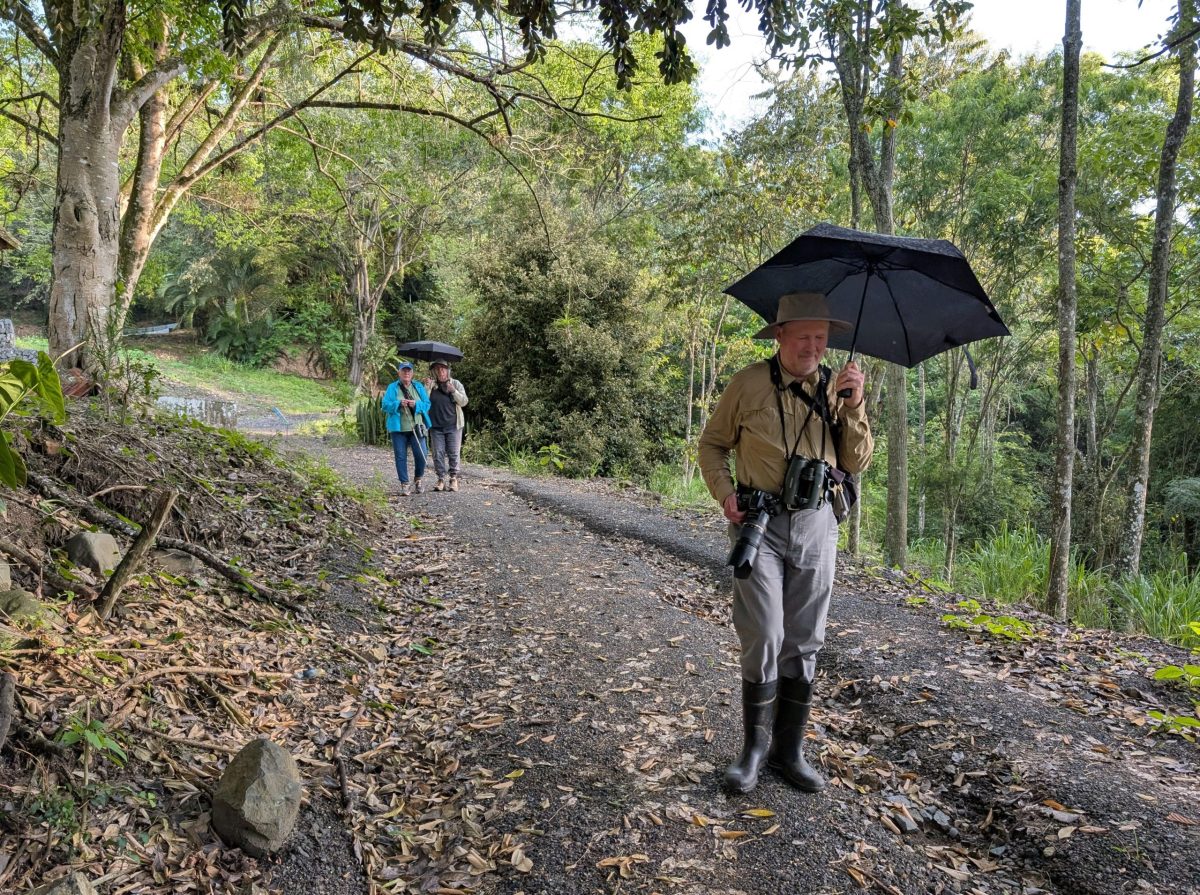
Upon arrival in the small town of Palestina, we met our local guide Brayan Coral Jaramillo, who would accompany us for the entire journey. Brayan is an exceptional birder & expert birding guide from the Sibundoy Valley in the Colombian Massif, with extensive field experience supporting biological research projects across the Putumayo region. His deep knowledge of local avifauna, primates and ecosystems was an invaluable addition to our private birding tour in Colombia.
Just ten minutes from town, we reached El Encanto Lodge by mid-afternoon, arriving with enough daylight for our first birding walk around the lodge grounds — and what a welcome it was!
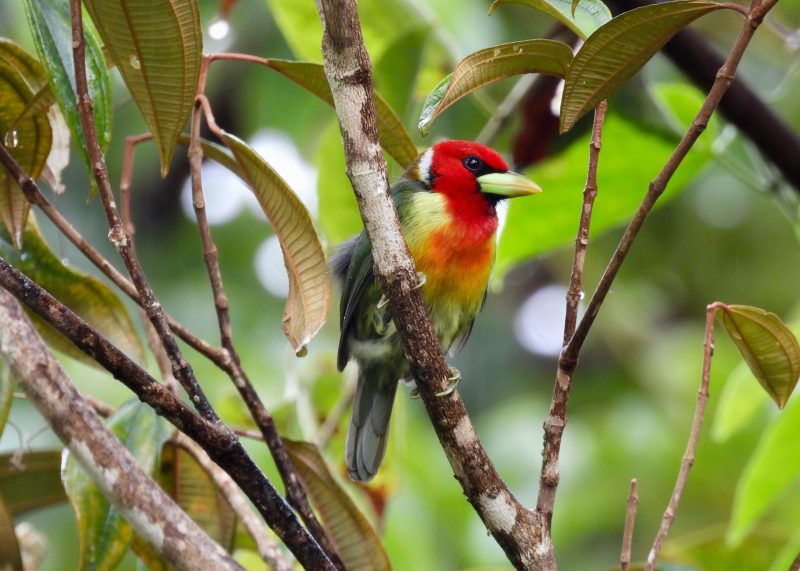
The fruit feeders were alive with color, attracting a parade of dazzling species: Golden-eared Tanager (male and female), Bay-headed Tanager, Red-headed Barbet (both sexes), near-endemic Scrub Tanager, Blue-necked Tanager, Crimson-backed Tanager, Tropical Mockingbird, White-lined, Blue-gray and Palm Tanagers, Green Honeycreeper, Buff-throated and Streaked Saltators, and Thick-billed Euphonia, among others. The endemic Colombian Chachalaca made several lively appearances, hopping confidently onto the feeders.
The blooming verbenas in the garden drew a spectacular array of hummingbirds. We enjoyed close views of a jewel-like male Gorgeted Woodstar and a brilliant Red-billed Emerald. The nectar feeders attracted the endemic Indigo-capped Hummingbird, Shining-green Hummingbird, Brown Violetear, White-vented Plumeleteer, and Rufous-tailed Hummingbird — a vibrant display of colors and activity.
Nearby forest edges and scrublands produced additional treasures, including Apical Flycatcher (endemic to Colombia), Solitary Black Cacique, Ash-browed and Slaty Spinetails, Bar-crested Antshrike, Squirrel Cuckoo, Rusty-margined Flycatcher, Great Kiskadee, Smooth-billed Ani, Southern House Wren, Pale-breasted and Black-billed Thrush, Blue-black Grassquit, Yellow-bellied Seedeater, and Saffron Finch.
Adding a northern touch, several Neotropical migrants enriched the afternoon’s list — notably eight Cerulean Warblers, three Blackburnian Warblers, and a Western Wood-Pewee.
As daylight faded, Bronze-winged Parrots and Scarlet-fronted Parakeets passed overhead, heading to their evening roosts, while Gray-rumped Swifts swooped gracefully above, catching insects in the dimming light.
The day closed beautifully with the calls of Mottled Owl and Tropical Screech-Owl echoing through the night, a fitting serenade to mark the start of our birding adventure in southern Colombia.
Our first full day of birding was designed as an easy and relaxed introduction to the diverse avifauna of southern Huila — the perfect pace for Judy and Cliff to recover from their long journey from the United States to Colombia.
We met at 6:00 a.m. to start the morning right where the action was — around the lodge lights, which had been left on overnight to attract insects. This “insect buffet” drew a wonderful mix of early-rising birds feeding enthusiastically at dawn. Highlights included Bar-crested Antshrike, Gray-headed Tanager, Common Tody-Flycatcher, Tropical Mockingbird, Crimson-backed, Blue-gray, Palm and Blue-necked Tanagers, and Rufous-collared Sparrow, among others — a lively and colorful start to the day.
After this exciting warm-up, we took a short hike on the forest trails adjacent to El Encanto Lodge, a lush mosaic of secondary forest and edge habitat teeming with activity. Among the morning’s best sightings were Rufous-naped Greenlet, Green Jay, Streaked Xenops, Olivaceous Piculet, Smoky-brown and Red-crowned Woodpeckers, Ash-browed Spinetail, Scrub Tanager, Gray-breasted Wood-Wren, Plain Antvireo (male and female), Roadside Hawk, Squirrel Cuckoo, Black-throated Mango, Golden-faced Tyrannulet, Yellow-olive Flatbill, Boat-billed Flycatcher, Andean Solitaire, Pale-breasted Thrush, Green Honeycreeper, and Slate-throated Redstart.
The combination of Andean foothill forest and open garden edges made this an exceptionally productive session — rich in diversity and filled with birdsong.
After a hearty breakfast, we continued birding along a quiet rural road that winds through the nearby community. The trail passes coffee plantations, home gardens, and secondary forests dotted with magnificent shade trees — a classic landscape of Colombian coffee country.
The birding here was superb, with standout species including the rare White-fronted Tyrannulet, over a dozen Cerulean Warblers, several Blackburnian and Canada Warblers, Bronze-green Euphonia (male and female), Crimson-rumped Toucanet, Spot-breasted Woodpecker, Red-headed Barbet, Gray-breasted Sabrewing, Short-tailed Emerald, Slaty Spinetail, Slaty-capped Flycatcher, White-winged Becard, Rufous-browed Peppershrike, Orange-billed Nightingale-Thrush, Swainson’s Thrush, Golden Tanager, Yellow-faced and Dull-colored Grassquits, Summer and Hepatic Tanagers, Chestnut-capped Warbler, and Lesser Goldfinch.
This mix of resident and migratory species illustrated beautifully how Colombia’s coffee-growing landscapes serve as crucial stopover habitats for Neotropical migrants like the Cerulean Warbler.
Following a delicious lunch and a well-earned midday rest, we drove to “El Alma del Bosque” (The Forest’s Soul), a charming shade-grown coffee plantation interspersed with open pastures and scattered trees. We took a leisurely stroll along a gentle downhill path, finding another impressive variety of birds.
Among the highlights were a Short-tailed Hawk perched beautifully before taking flight, engaging briefly on a vocal dispute with a Roadside Hawk; the endemic Dusky-headed Brushfinch; White-naped Brushfinch; and the Colombian Chachalaca, another endemic species common to this region. We also noted White-throated Crake (heard), White-tipped Dove, Bronze-winged Parrot, Scarlet-fronted Parakeet, Brown, Lesser and Sparkling Violetears, Pale-breasted and Ash-browed Spinetails, Yellow-bellied Elaenia, Western Wood-Pewee, Olive-sided Flycatcher, Vermilion Flycatcher, Bran-colored Flycatcher, Rusty-margined Flycatcher, Great Kiskadee, Streaked Flycatcher, Tropical Kingbird, Southern Rough-winged Swallow, White-lined Tanager, Blue-necked and Bay-headed Tanagers, Ruddy-breasted, Yellow-bellied and Gray Seedeaters, Buff-throated and Streaked Saltators, and Black-striped Sparrow.
As sunset approached, we returned to El Encanto Lodge to enjoy one last session around the hummingbird feeders and flowering verbenas. The evening display involved the Brown, Lesser, and Sparkling Violetears engaged in fierce aerial chases, while Black-throated Mango, White-vented Plumeleteer, Rufous-tailed Hummingbird, Indigo-capped Hummingbird, Andean Emerald, and Shining-green Hummingbird all made regular appearances.
It was a perfect conclusion to a day that combined gentle exploration and the vibrant charm of birding in the coffee landscapes of southern Huila.
These two days were dedicated to exploring the beautiful forests of the Drymophila Reserve, where we enjoyed a superb collection of southern Colombian specialties. After a 5:00 a.m. coffee, we set off for the reserve — an 11-kilometer drive along a steep gravel and clay road that took about 45 minutes.
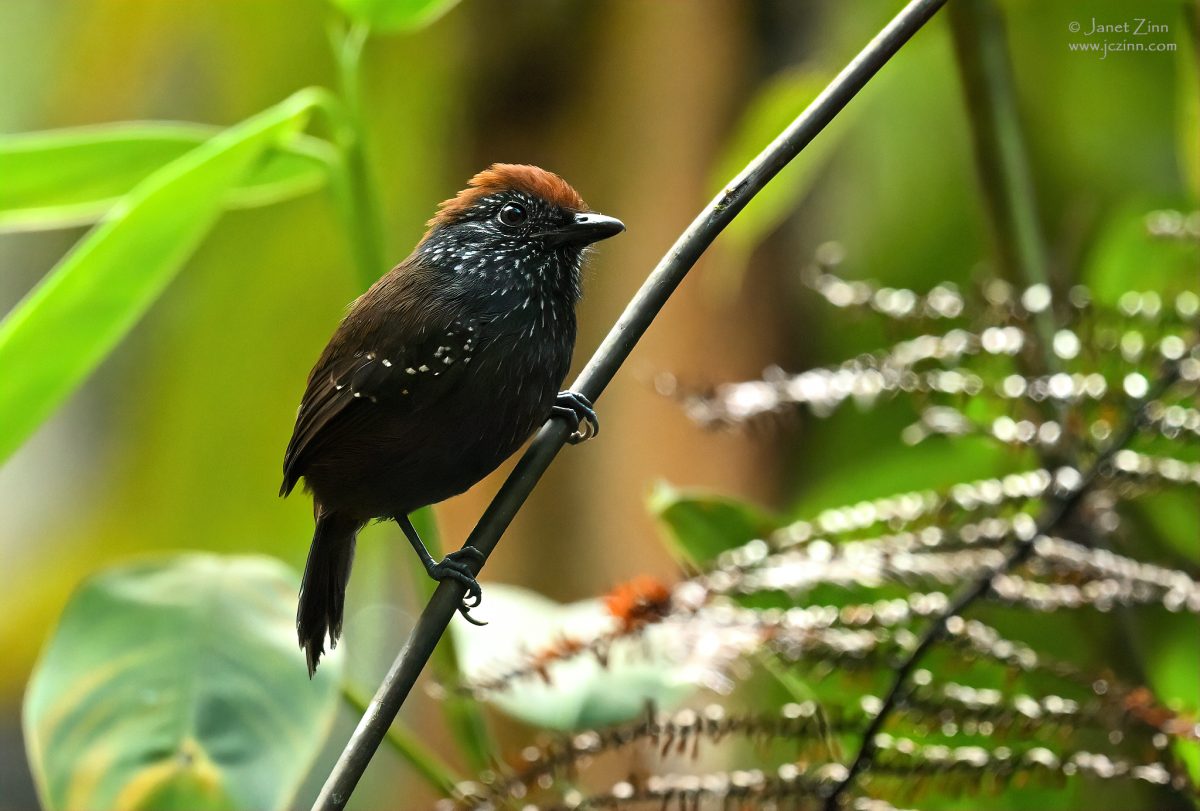
The reserve takes its name from Drymophila, the scientific genus of the East Andean Antbird, an endemic species restricted to Colombia’s Eastern Andes. Nestled at mid-elevation within the buffer zone of the iconic Cueva de los Guácharos National Park (“Guácharo” being the Spanish name for the Oilbird), the site offers pristine cloud forest, comfortable facilities, and an impressive diversity of birds.
A well-built wooden cabin provided a cozy shelter from the rain and a pleasant base for meals and rest, complete with a dining area, kitchen, and hammocks on the deck. The reserve’s trails cut gently across the mountainside, making for easy and rewarding hiking, with little need to venture off the paths.
Right outside the deck, the feeders were constantly active, drawing an astonishing variety of hummingbirds and tanagers. We enjoyed incredibly close views of at least three males of the endemic Tolima Blossomcrown, along with Violet-fronted Brilliant, Rufous-vented Whitetip, Short-tailed Emerald, Gorgeted Woodstar, Crowned Woodnymph, White-booted Racket-tail, Andean Emerald, Bronzy Inca, Long-tailed Sylph, Speckled Hummingbird, Buff-tailed Coronet, Fawn-breasted Brilliant, and the ubiquitous Brown, Lesser, and Sparkling Violetears. The diversity of species and the abundance of individuals makes this reserve a must for bird photography tours in Colombia.
Fruit and cornmeal feeders attracted equally colorful visitors, including Red-bellied Grackles (endemic), Dusky-headed Brushfinch (endemic), Flame-faced Tanager, Green Jay, Scarlet-rumped Cacique, Gray-headed Tanager, Blue-gray and Palm Tanagers, Green Honeycreeper, and Yellow-backed Oriole.
A nearby fruiting Cecropia tree added even more activity, frequently visited by a male Golden-winged Manakin, Chestnut-bellied Thrush, Golden-rumped Euphonia, and a vivid assortment of Golden, Scrub, Blue-necked, and Golden-naped Tanagers.
At the forest edge, the endemic & endangered Tolima Dove and White-throated Quail-Dove made repeated visits to the ground feeders, while a Western Fire-eye fed on insects drawn to the night lamps, alongside Chestnut-capped Brushfinch, Gray-breasted Wood-Wren, Russet-crowned and Three-striped Warblers, Slate-throated Redstart, and Canada Warbler.
Perhaps the stars of the show were the White-bellied Antpitta and the near-endemic Hooded Antpitta — three individuals that cooperatively came to feed on earthworms. Nearby, Schwartz’s Antthrush vocalized persistently but remained elusive. This reserve is a key location for any Colombia antpitta guide or enthusiast.
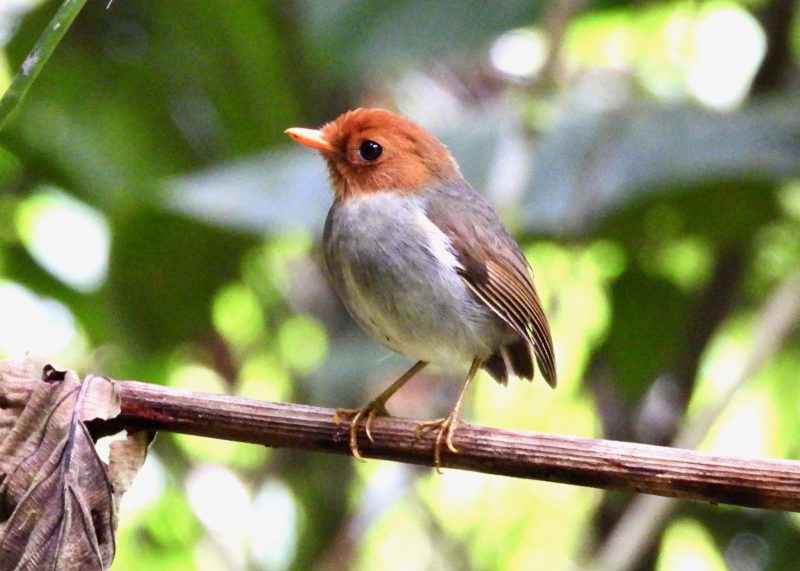
Walking along the trails, we enjoyed views of the East Andean Antbird (the reserve’s namesake and endemic highlight), a striking male Black-chested Fruiteater, Rufous-tailed Tyrant, Plumbeous-crowned Tyrannulet, Uniform Antshrike, Masked Trogon, Crimson-rumped Toucanet, Russet-backed Oropendola, Acorn Woodpecker, Squirrel Cuckoo, Bar-crested Antshrike, Andean Solitaire, Azara’s Spinetail, Golden-faced Tyrannulet, Western and Eastern Wood-Pewees, Olive-sided Flycatcher, Smoke-colored Pewee, Magpie Tanager, Red-headed Barbet, Tawny-bellied Hermit, and Yellow-bellied Siskin.
Mixed flocks added even more excitement, with Oleagineous Hemispingus, Cinnamon and Pale-edged Flycatchers, Rufous-breasted and Streak-necked Flycatchers, Lineated and Montane Foliage-Gleaners, and both Cerulean and Blackburnian Warblers among the highlights.
Throughout the forest, we also heard Yellow-throated Spadebill, Golden-headed Quetzal, Black-billed Peppershrike, Southern Emerald Toucanet, Black-streaked Puffbird, Crimson-crested Woodpecker, Long-tailed Tapaculo, Lemon-browed and Golden-bellied Flycatchers, Brown-capped Vireo, Whiskered Wren, and Blue-naped Chlorophonia.
While Barred and Collared Forest-Falcons called from within the dense canopy, they stayed hidden from view — as did the ever-vocal Ruddy Pigeon. Small flocks of Barred and Scarlet-fronted Parakeets, Red-billed, and Bronze-winged Parrots passed overhead, and a group of four Maroon-tailed Parakeets was seen briefly as they crossed the valley.
In the early afternoon of Day 3, we descended the mountain to visit the Coneco wetland remnant near Pitalito, a small city about 50 minutes from the lodge. Our local guide, Michael Molina, had kindly arranged permission with the landowner of a cattle ranch where a fragment of this once-extensive wetland still survives.
To our delight, we were greeted by a magnificent Horned Screamer guarding five juveniles. The scope views of its ornate horn were spectacular, and Judy managed excellent photos.
We then strolled along the marsh edge through open pastures dotted with trees, stopping by a large Guadua bamboo stand, where we successfully located our target — the rarely seen Large-headed Flatbill. Over fifty Eastern Kingbirds were actively migrating through, perching in the tallest trees before continuing their journey south.
For about two hours we enjoyed a wealth of waterbirds, including Black-bellied Whistling-Duck, Cinnamon Teal, Blue-winged Teal, Buff-necked Ibis, Black-crowned Night-Heron, Striated Heron, Wattled Jacana, Bare-faced Ibis, Southern Lapwing, Spotted Sandpiper, Common Gallinule, and numerous Yellow-hooded Blackbirds.
The scattered trees in the pastures provided good habitat for the endemic Velvet-fronted Euphonia, as well as Spot-breasted and Lineated Woodpeckers, Scrub Greenlet, Greater and Smooth-billed Anis, Yellow-bellied Elaenia, Eastern Wood-Pewee, Olive-sided Flycatcher, Vermilion Flycatcher, Social Flycatcher, Cattle Tyrant, Great Kiskadee, Tropical Kingbird, and Ruddy-breasted Seedeater. Common species such as Great and Snowy Egrets, Western Cattle Egret, Black Vulture, Yellow-headed Caracara, Ruddy Ground Dove, Shiny Cowbird, and Saffron Finch completed the list.
As the sun dipped behind the hills, a large group of Common Nighthawks and White-collared Swifts appeared, gliding gracefully and feeding in the evening sky alongside Blue-and-white Swallows — a serene end to another outstanding day of birding in southern Colombia.
Day 5 – Birding the gateway to the Amazon Basin: From Pitalito to Mocoa
Our birding adventure continued south into the foothills of the Colombian Amazon, a fascinating transition zone where Andean and Amazonian ecosystems meet. The day’s journey took us from Pitalito to Mocoa, a region renowned for its rich biodiversity and breathtaking forested landscapes.
Spectacled Prickletail and a Premontane Mix Flock
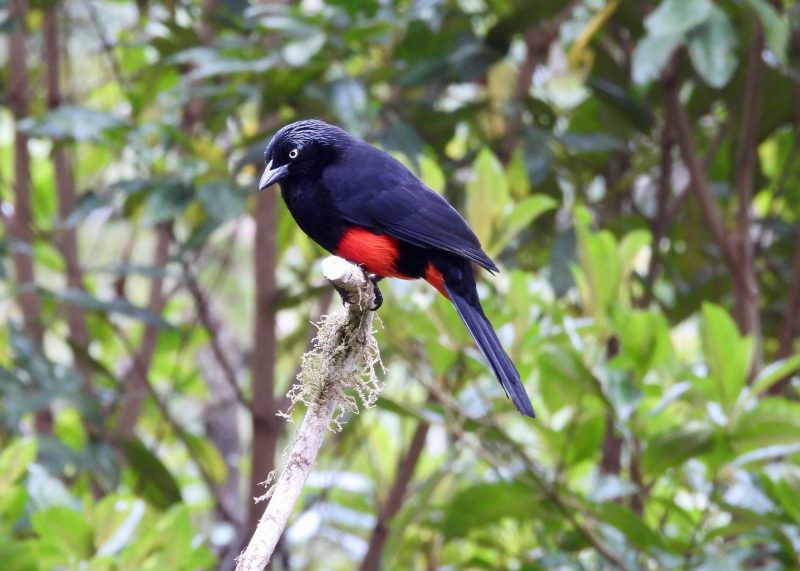
Our first stop was the Parador Turístico Ruta 45, where we met our local bird guide Hernando (“Nando”), who led us into a nearby property—a trout farm surrounded by pristine premontane forest. The habitat was alive with bird activity, and within minutes, we had our first highlight: a Red-ruffed Fruitcrow, a spectacular and elusive species that gave us long, satisfying views of a glowing male.
As the tropical rain poured and then cleared, the forest erupted with life. A massive mixed flock moved through the canopy, offering thrilling birdwatching moments. Among the many species we recorded were:
Spectacled Prickletail, Montane Woodcreeper, Orange-eared Tanager, Rufous-crested Tanager, Short-billed and Yellow-throated Chlorospingus, Beryl-spangled Tanager, Black-capped Tanager, Blue-necked Tanager, Flame-faced Tanager, Fawn-breasted Tanager, Squirrel Cuckoo, near-endemic Rufous-breasted Flycatcher, Variegated Bristle-Tyrant, Golden-faced Tyrannulet, Cinnamon Flycatcher, Chestnut-bellied Thrush, Slate-throated Redstart, Deep-blue and Masked Flowerpiercers, Orange-bellied Euphonia, and Blue-naped Chlorophonia.
It was one of those magical Andean birding moments—alive with sound, color, and movement.
After the excitement of the flock, we returned to the parador, where the gardens offered excellent views of several hummingbird species. While enjoying a well-deserved coffee, we observed Geoffroy’s Daggerbill and Black-throated Mango feeding on the crimson blooms of Erythrina trees, joined by a delicate Speckled Hummingbird.
Hummingbirds and Amazonian Cuisine
As we continued south, descending in altitude, we arrived at the Discosura Birding Center, where Ilder and his family welcomed us warmly. The moment we stepped out of the vehicle, we were surrounded by birdsong and movement — the forest alive with color and sound.
The garden flowers attracted a parade of dazzling species: Golden-tailed Sapphire, Blue-tailed Emerald, Violet-headed Hummingbird, Fork-tailed Woodnymph, Glittering-throated Emerald, a spectacular Long-tailed Sylph, and once again, Black-throated Mango.
As we savored a delicious Amazonian-style tilapia, wrapped in plantain leaves and perfectly seasoned, Cliff caught a glimpse of a Wire-crested Thorntail—a rare and unexpected visitor at this time of year.
Around the same gardens, we also recorded Scaled Piculet, Yellow-browed Sparrow, Yellow-bellied Seedeater, Saffron Finch, and Bananaquit.
Birding from the Viewpoint and Along the Trail
From the parking area, short forest trails, and the elevated view tower (still under construction), we added an impressive list of Amazon foothill birds:
Black-streaked Puffbird, Gilded Barbet, Little Woodpecker, Ornate Flycatcher, Rusty-winged Antwren, Rufous-tailed Foliage-gleaner, Speckled Chachalaca, Ruddy Pigeon, Olive-striped Flycatcher, Slaty-capped Flycatcher, Common Tody-flycatcher, Violaceous Jay, Green-backed Trogon, Long-tailed Tyrant, Western Wood-Pewee, Short-crested Flycatcher, White-bearded Manakin, Thrush-like Wren, Paradise Tanager, Green-and-gold Tanager, Flame-crested Tanager, Magpie Tanager, White-lined Tanager, Golden Tanager, Silver-beaked Tanager, Swallow Tanager, Blue-gray Tanager (White-edged form), Black-faced Dacnis, Deep-blue Flowerpiercer, Russet-backed Oropendola, and Yellow-rumped Cacique.
The abundance and diversity of birdlife in this area make it one of the best birding destinations in southern Colombia, especially for those interested in the transition between Andean and Amazonian ecosystems.
As we descended toward Mocoa, the open areas and roadside habitats provided additional sightings from the moving vehicle, including: Roadside Hawk preying on a small lizard, American Kestrel, Yellow-headed Caracara, Southern Lapwing, Bare-faced Ibis, White-naped Brushfinch, endemic Dusky-headed Brushfinch, Pale-breasted Spinetail, Black Phoebe, Saffron Finch, Black-billed Thrush, Tropical Kingbird, Yellow-bellied Seedeater, Bananaquit, and Eastern Meadowlark.
Arriving in Mocoa early in the evening, we were thrilled by the day’s rich list of species—an unforgettable introduction to the Amazonian foothills of Colombia, where Andean beauty meets tropical diversity.
With a 5:45 a.m. departure from Dantayaco Hotel, we set out toward the iconic Trampolín de Las Aves, a steep mountain road that climbs from Mocoa to Sibundoy through the dramatic landscapes of the Colombian Massif. We stopped for breakfast at a small local shop, where bird activity was already lively. Judy spotted two male and one female Andean Cock-of-the-rock—a fantastic start for any Andean Cock-of-the-rock tour— followed by great views of Gilded and Red-headed Barbets, three Speckled Chachalacas, Glittering-throated Emerald, Roadside Hawk, Blue-headed Parrot, Smooth-billed Ani, Social Flycatcher, Violaceous Jay, Silver-beaked and Magpie Tanagers, Swallow Tanager, Purple Honeycreepers, a charming pair of Thrush-like Wrens, and the ever-present Russet-backed Oropendola.
We began the ascent along the Trampolín, first on paved sections and then onto a narrow, winding gravel road overlooking the vast Mocoa Valley and the Serranía de los Churumbelos. Stopping regularly to bird along the way, we enjoyed excellent views of Sickle-winged Guan, Plain-brown Woodcreeper, Green-fronted Lancebill, Greenish Puffleg, Green-backed Hillstar, Golden-winged Manakin, Uniform Antshrike, Dusky and Rufous Spinetails, Chestnut-bellied Chat-Tyrant, Golden-bellied Flycatcher, Coraya Wren, Great and Chestnut-bellied Thrushes, and a colorful array of tanagers including Blue-winged Mountain, Blue-necked, Bay-headed, and Golden. Flowerpiercers, euphonias, and the songs of White-crowned Tapaculo, Dusky Piha, and Gray-breasted Wood-Wren enriched the soundscape.
A magical moment came when seventeen Swallow-tailed Kites glided gracefully above the canopy, with a single Turkey Vulture among them—an unforgettable sight.
By late morning, a sudden storm broke, forcing us to take shelter at a small roadside café as thunder and lightning rolled through the valley. Mist and intermittent rain lingered for the rest of the day, slowing bird activity. Even so, Brayan led us to a reliable spot for Chestnut-breasted Coronet, which offered only a fleeting view.
Our luck improved on the descent toward Mocoa. We enjoyed close views of White-rimmed Brushfinch, a family group of four White-capped Tanagers, and a magnificent Black-billed Mountain-Toucan that perched in full view. A passing mixed flock yielded further gems—Orange-eared and Golden-eared Tanagers, Golden-collared Honeycreeper, Black-billed Treehunter, Lineated Foliage-Gleaner, Olive-striped and Rufous-breasted Flycatchers, Cinnamon Flycatcher, Deep-blue Flowerpiercer, Three-striped Warbler, and Slate-throated Redstart—bringing a fine close to a day of spectacular Andean birding.
We enjoyed a slow and pleasant start today, with breakfast at 7:30 a.m. followed by a short walk around the restaurant, which is surrounded by beautiful secondary forest. Even from the parking lot, bird activity was remarkable. Among the first sightings were Red-capped Cardinal, Masked Tanager, Turquoise Tanager, Magpie Tanager, Yellow-bellied Dacnis, Purple Honeycreeper, Thrush-like Wren, Yellow-crowned Tyrannulet, Gray-capped Flycatcher, Common Tody-Flycatcher, Silver-beaked Tanager, Blue-gray and Palm Tanagers, Buff-throated Saltator, Crested Oropendola, Glittering-throated Emerald, and Black-throated Mango — an excellent start to the day.
Afterward, we drove about 50 minutes to El Escondite Nature Reserve, where we were warmly welcomed by the owner and staff. The reserve’s headquarters, surrounded by lush secondary forest and flower-filled gardens, proved highly productive for birding even before we ventured onto the trails. Standing in the garden, we quickly spotted Orange-fronted Plushcrown, Orange-eyed Flatbill, Gray-capped Flycatcher, Lafresnaye’s Piculet, Fork-tailed Woodnymph, White-winged Becard, Glittering-throated Emerald, Streaked Flycatcher, Piratic Flycatcher, Social Flycatcher, Short-crested Flycatcher, Boat-billed Flycatcher, Yellow-bellied Dacnis, and Purple Honeycreeper — a wonderful sampling of the region’s Amazonian birdlife, and a must for bird photography tours in Colombia.
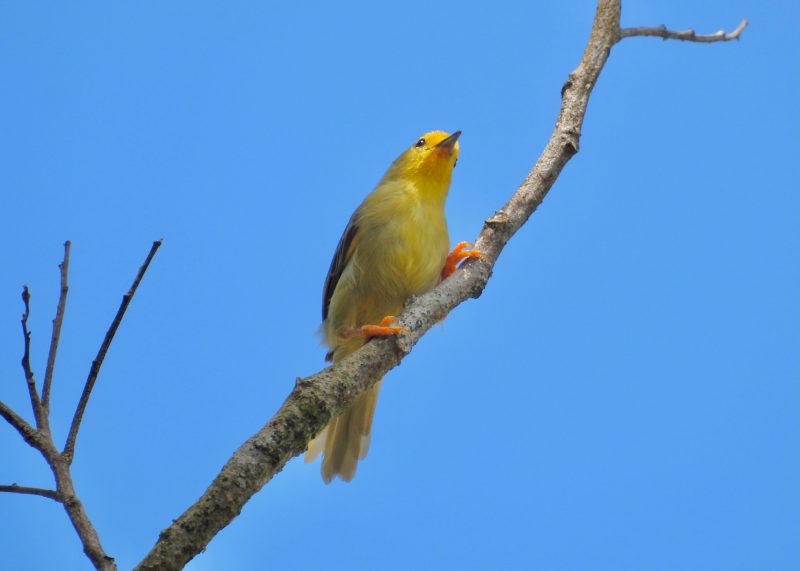
After lunch, we enjoyed a well-deserved hammock siesta while the midday heat passed. Later in the afternoon, we hiked along a shaded trail that followed a crystal-clear stream. Bird activity was naturally slower under the strong sun, but patience was rewarded when we encountered a lively fast-moving group of canopy birds featuring White-throated Toucan, Purple-throated Fruitcrow, Violaceous Jay, Russet-backed Oropendola, Chestnut Woodpecker, Olive-faced Flatbill, and the distinctive calls of Large-headed and Gray-crowned Flatbills.
In the late afternoon, we explored a short stretch of local road flanked by pastures and forest patches that were buzzing with bird activity. Brayan skillfully called in a Cinnamon Attila, which responded beautifully, followed by excellent views of two White-chinned Jacamars. A Chestnut Woodpecker and a pair of Cream-colored Woodpeckers gave truly spectacular views — one of the trip’s most memorable moments. Swallow-winged Puffbirds perched conspicuously on low branches and bushes scattered across the pastures.
As we moved along, we encountered a fine pair of Yellow-browed Tody-Flycatchers, Lafresnaye’s Piculet, Yellow-tufted Woodpecker, Black-tailed Tityra, Straight-billed Woodcreeper, Lesser Kiskadee, Social & Piratic Flycatcher, Southern House Wren, Turquoise & Summer Tanager, Russet-backed Oropendola, and Yellow-rumped Cacique.
Birding along the shaded road continued to deliver: a pair of Masked Crimson Tanagers glowed in the soft light, and Lineated Woodpecker, Plumbeous Kite, Roadside Hawk, Yellow-headed Caracara, Greater Ani, and Smooth-billed Ani showed well. Overhead, five Red-bellied Macaws cruised by while numerous Short-tailed Swifts bounced gracefully in the sky.
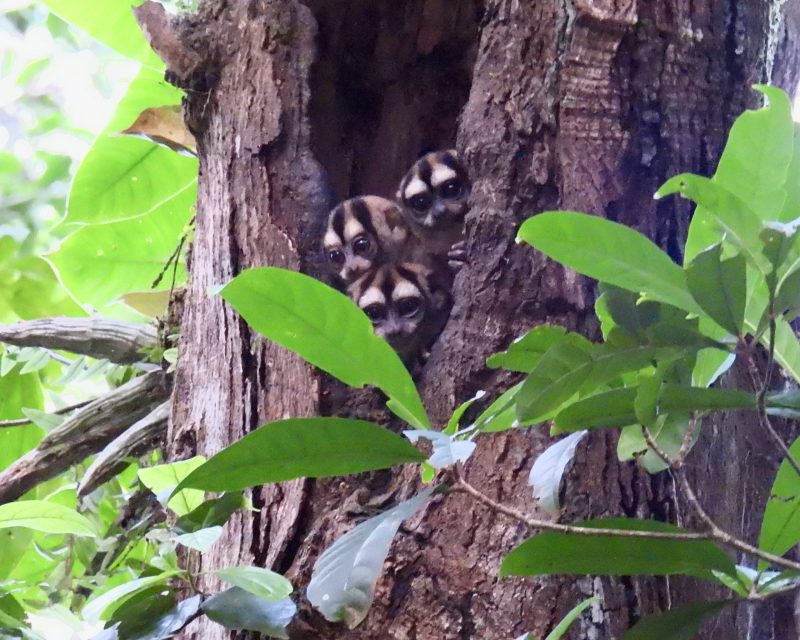
A Pale-vented Pigeon, perched under full sunlight, revealed its beautiful iridescent tones and deep red eyes. Above the canopy, two Black-hawk Eagles circled and called repeatedly. As dusk approached, the haunting calls of Undulated Tinamou and White-throated Toucan filled the forest, joined later by the repeated calls of a Ferruginous Pygmy-Owl.
One of the day’s most remarkable scenes came just before sunset: a female Crimson-crested Woodpecker fiercely confronting a group of five Violaceous Jays. The cause of the altercation remained a mystery, but it was clear there was no winner — only a display of strength and defiance, perfectly capturing the wild spirit of Putumayo’s forests.
Our morning in Puerto Asís began with the rhythmic sound of heavy rain, which had persisted through the night and well into the early hours. By 7:30 a.m., the clouds finally lifted, revealing a bright, humid morning in the lowlands of Putumayo. We drove a short 20 minutes to the Hojarasca Center, where we were welcomed by Diego Rocha, an expert birding guide and owner of one of the properties within this unique gated community. The area features a network of quiet roads that cross through wetlands, gardens, orchards, and remnant forest—an excellent mosaic for lowland birding.
As breakfast was being prepared, the activity around the house was vibrant. Scarlet-crowned Barbet, Lettered and Chestnut-eared Aracaris, and Speckled Chachalacas brightened the morning. We also enjoyed close views of Lafresnaye’s Piculet, Yellow-tufted Woodpecker, Yellow-browed and Common Tody-Flycatchers, Olive-faced Flatbill, Social Flycatcher, Great Kiskadee, Boat-billed Flycatcher, Yellow-browed Sparrow, and both Wing-barred (Caquetá) and Chestnut-bellied Seedeaters.
After breakfast, we visited a small wetland where we had a close and thrilling encounter with an Ash-throated Crake, while Black-banded and Rufous-sided Crakes called nearby, along with a Gray-cowled Wood-Rail. We obtained our first good looks at Green Ibis, and also saw Bare-faced Ibis, Osprey, and Blush-gray Saltator.
We then strolled along the inner roads of the community, adding a long list of exciting species, including Red-bellied Macaw, Dusky-headed Parakeet, Riparian and Cobalt-winged Parakeets, Blue-headed Parrot, Orange-winged Amazon, Hoatzin, Russet-backed Oropendola, Squirrel Cuckoo, Gray-fronted Dove, Plumbeous Kite, Black Caracara, Pale-vented Pigeon, Crimson-crested Woodpecker, Cinnamon-throated and Straight-billed Woodcreepers, Piratic Flycatcher, Short-crested Flycatcher, White-winged Becard, Violaceous Jay, Spot-breasted and Little Woodpeckers, Yellow-rumped Cacique, and Orange-backed Troupial.
A particularly memorable moment came with a group of four Orange-fronted Plushcrowns, which were actively foraging in the treetops, allowing satisfying views.
Near a shaded stream, we encountered a productive bird activity with Brown Jacamar, Peruvian Warbling-Antbird, Great Antshrike, Black-fronted Nunbird, Swallow-winged Puffbird, Red-capped Cardinal, Purple-throated Fruitcrow, and Magpie Tanager. Even more exciting were the Rufous-headed and Chestnut Woodpeckers, both showing beautifully. A Black-spotted Bare-eye moved furtively through dense undergrowth, while attempts to coax out White-shouldered Antbird and White-lored Antpitta were unsuccessful this time.
Several species of swifts—Fork-tailed Palm-Swift, White-collared, and Short-tailed Swift—were feeding overhead. A Ferruginous Pygmy-Owl was heard, and when we played its call, a mobbing wave of small birds appeared, including a female Plum-throated Cotinga, Turquoise Tanager, Yellow-bellied Dacnis, White-vented, Golden-bellied, and Thick-billed Euphonias, along with Long-billed Starthroat, Glittering-throated Emerald, Mouse-colored and Yellow-crowned Tyrannulets, Streaked Flycatcher, Silver-beaked, Blue-gray, and Palm Tanagers, Yellow Warbler, and Saffron Finch.
A highlight of the morning was a stunning male Bare-necked Fruitcrow that flew overhead and perched conspicuously, giving us excellent views of this spectacular cotinga. Shortly afterward, we enjoyed our second encounter with the brilliantly colored Masked Crimson Tanager.
Other species recorded included Undulated Tinamou, Amazonian Motmot, Dark-breasted Spinetail, and Cinnamon Attila, all heard but not seen.
To wrap up the morning, we visited a series of nearby fish ponds where we found to our surprise a Wilson´s Phalarope actively feeding on shallow water next to several North American migrants: Pectoral and Least Sandpipers, Spotted and Solitary Sandpipers, Greater and Lesser Yellowlegs, another Osprey, Ringed Kingfisher, Purple Gallinule, Striated Heron, Great Egret, and Snowy Egret.
Despite the challenging weather at dawn, the visit to Hojarasca Center turned into one of the most productive mornings of the trip. The combination of wetlands, forest edge, and secondary growth made for an extraordinary diversity of species, confirming the birding richness of the Putumayo lowlands—a region that will continue to surprise with its abundance and variety of Amazonian and foothill birds.
The next two days were devoted to exploring the Putumayo River, birding by boat and visiting two local riverine communities: Playa Rica, home to around thirty-five families, and Boutú, located further downstream. Playa Rica lies only about 20 minutes by boat from Puerto Asís, while Boutú requires a longer journey of about 1 hour and 45 minutes along the sinuous course of the river. The local community manages both transportation and meals for visitors, and we were treated to delicious breakfasts and lunches prepared by the families.
At Playa Rica, a concrete path runs along the riverbank—a walkway used by locals that also provides an excellent birding trail, especially during the rainy season when the ground elsewhere becomes muddy. We spent the morning birding along this path and later followed a short dirt trail that wound deeper into the greenery, crossing patches of secondary forest and small plantations of rice, manioc, and plantain.
We enjoyed memorable sightings of a booming male Amazonian Umbrellabird and a female Bare-necked Fruitcrow, both perched in the canopy. A pair of Black-capped Donacobius responded well to playback, offering prolonged views.
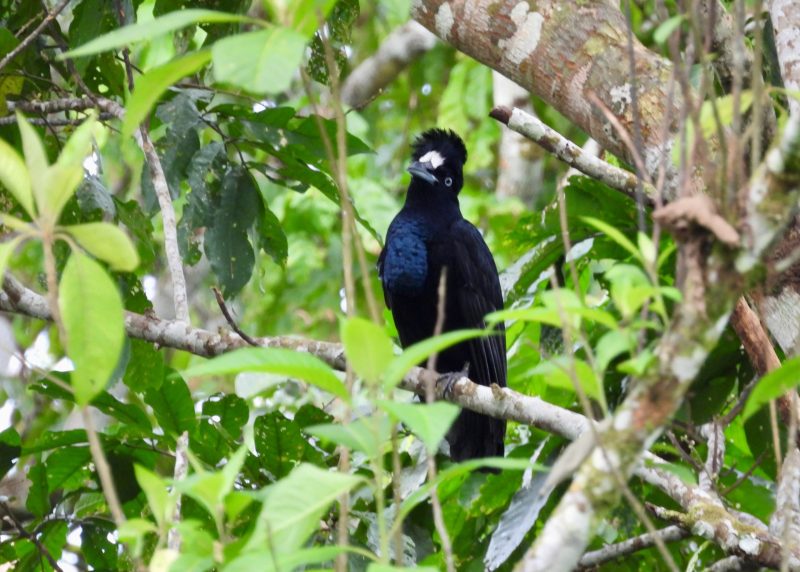
Among the highlights were Riparian Antbird, White-eared and White-chinned Jacamars, Speckled Chachalaca, Rufescent Tiger-Heron, Ferruginous Pygmy-Owl, Black and Yellow-headed Caracaras, Cobalt-winged and Dusky-headed Parakeet, Red-bellied Macaw, Fork-tailed Palm-Swift, Black-fronted Nunbird, Swallow-winged Puffbird, Scarlet-crowned Barbet, Chestnut-eared Aracari, Yellow-tufted and Spot-breasted Woodpeckers, Great Antshrike (male and female) moving alongside a Cinnamon-throated Woodcreeper, Straight-billed Woodcreeper, Olive-faced Flatbill, Lesser Kiskadee, Piratic Flycatcher, Short-crested Flycatcher, Black-crowned Tityra, Violaceous Jay, Magpie Tanager, Silver-beaked Tanager, Russet-backed and Crested Oropendolas, and Yellow-rumped Cacique.
A migrating flock of about twenty Eastern Kingbirds added a sense of movement to the day, while Gray-breasted Martins and Bank Swallows patrolled the river edge.
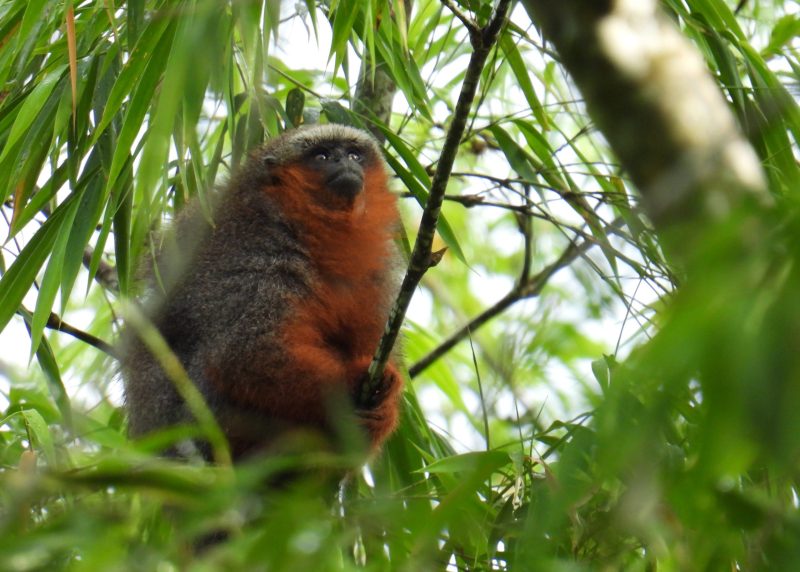
Reaching Boutú required navigating further downstream and into a narrow blackwater tributary known as the Cuembí Stream. Our main goal here was to look for the Amazonian Pink Dolphin, a species that continues to thrive in these quiet waters.
Indeed, we were joyfully surprised when an unobtrusive Pink Dolphin surfaced close to our boat, which was parked along the bank near the Boutú Center. It surfaced a second time a bit farther away, closer to the opposite bank, where a fisherman had just arrived home. Then, at least three more dolphins began to appear irregularly—here and there—as we gently maneuvered the boat to keep up with them. Their movements lacked any clear pattern, but we were completely absorbed by the surprise and unpredictability of their behavior. We followed them along the stream for about thirty minutes, until they finally drifted away down the dark, calm waters of the Cuembí.
Along the way, we also encountered a remarkable diversity of riverine birds. A Ladder-tailed Nightjar was found roosting low on a branch over the water, while more than thirty Hoatzins moved noisily from one riverbank to another. A Sunbittern welcomed us at Boutú with a short flight that displayed its intricate and colorful wing pattern. Over the water, White-banded and White-winged Swallows glided effortlessly in pursuit of insects.
From the boat, we also observed Drab Water-Tyrant, Osprey, Neotropic Cormorant, Striated Heron, Short-tailed Swift, Great and Snowy Egrets, Cocoi Heron, Turkey and Black Vultures, Southern Lapwing, Spotted Sandpiper, Yellow-billed Tern, Ringed Kingfisher, Southern Rough-winged Swallow and some beautiful Hoatzins!
Three Green-backed Trogons and a pair of Amazonian Trogons were particularly active and vocal. We also saw Lafresnaye’s Piculet, and both male and female Plum-throated Cotingas perched beautifully nearby. From a viewing tower, we added Opal-crowned Tanager, Turquoise Tanager, Yellow-bellied Dacnis, Long-billed Starthroat, Gray-capped Flycatcher, Boat-billed Flycatcher, and White-vented Euphonia.
Some species remained only heard from the moving boat, including Cinereous and Undulated Tinamous, Plumbeous Pigeon, White-throated Toucan, Cream-colored Woodpecker and Buff-throated Woodcreeper.
Birding along the Putumayo River was an unforgettable experience—two days of gentle navigation, extraordinary wildlife, and the warmth of the riverside communities. From colorful cotingas and umbrellabirds to Pink Dolphins surfacing in blackwater creeks, this stretch of the Colombian Amazon revealed its richness and calm beauty. These moments remind us how ecotourism can connect people and nature, sustaining both the biodiversity of the region and the lives of those who call the river home.
Our final morning was spent revisiting the Hojarasca Center, hoping to find two elusive species that had previously evaded us — the Black-banded and Rufous-sided Crakes. We also visited a newly established feeding station deep in the forest, where Diego Rocha had just begun attracting a White-lored Antpitta only two days earlier. To our delight, the bird responded almost immediately to Diego’s soft calls and his offering of earthworms. It appeared briefly, hopping into view just long enough for everyone to appreciate its delicate features before vanishing once again into the dense understory.
Although the crakes refused to cooperate, the morning still proved rewarding. We enjoyed excellent close views of a Rusty-fronted Tody-flycatcher, and soon after, a Black Hawk-Eagle soared low overhead, circling and calling above us — a fitting finale to our Andean and Amazonian birding adventure.
After a delicious lunch and a refreshing shower, we packed up and drove to the Puerto Asís airport, where we bid farewell to Judy and Cliff as they checked in with Satena Airlines. The following day, everyone arrived home safely — Judy and Cliff to Madison, Brayan to Sibundoy, and Daniel to Armenia — bringing to a close a wonderful journey across the wild and diverse landscapes of the Putumayo region.
YOU MAY ALSO LIKE
Putumayo & Huila Birding Trip Report: A Private Colombia Birding Tour (Oct 2025) with Judy Harackiewicz & Cliff Thurber from Madison
SEE MORE
Birding & photographing birds along the Central & Western Andes with Doug & Gail Cheeseman (April 22 – May 8, 2019).
SEE MORE
Birding the Central & Western Andes with Anthony Kaduck & Ken Edwards from Canada (March 20 – April 5, 2019).
SEE MORE
Birding Mitú, Inírida & the Perijá Mountains for key species with Hans Jornvall from Sweden (January 5 - 23, 2019).
SEE MORE
Second birding trip to Colombia for Ernest Bradley & Dale Brinker (November 19 – December 03, 2018).
SEE MORE
Birding Hato La Aurora in the Eastern Llanos with Todd Pepper & Mark Eaton (December 1 – 4, 2017).
SEE MORE
Birding the Central & Western Andes of Colombia with Anthony Collerton (July 14 – 23, 2017).
SEE MORE
Andean Endemics tour with British crew: from the Eastern Andes to the mid-Magdalena Valley & Central Andes of Colombia (March 1 – 14, 2017).
SEE MORE
Another challenging & productive trip for Hans Jörnvall from Sweden (January 2 – 15, 2017).
SEE MORE
The Eastern Andes from Bogota to Soata: birding trip for recordist Terry Morgan & Karen Walz (November 18-30, 2016).
SEE MORE
Second birding trip for Katy Krigbaum & Birgit Felser: the Western & Central Andes of Colombia (September 1-20, 2016).
SEE MORE
Birding for much desired targets with Keith Betton, Andrew Herbert (UK) and Rainer Kopa (Germany) (April 17-May 7, 2016).
SEE MORE
Birding the Western & Central Andes with Richard & Jennifer Kershaw from UK (March 10-31, 2016).
SEE MORE
Second birding trip for Steve Huggins & Glenn Giacinto from Chicago, Illinois (January 23 – February 2, 2016).
SEE MORE
Birding along the Western & Central Andes of Colombia with Bob & Katie Self from the UK (November 9 – 26, 2015).
SEE MORE
Birding in Colombia from the Western Andes to the Santa Marta Mountains & Guajira peninsula, with a recapitulation.
SEE MORE
The Eastern Andes, mid-Magdalena Valley, Santa Marta Mountains & La Guajira peninsula with Katy Krigbaum & Birgit Felser (Sept. 2 – 21, 2015).
SEE MORE
Bird photo tour for photographers from Taiwan & China: The Western & Central Andes of Colombia (July 18 – August 8, 2015).
SEE MORE
Second birding trip for Debby Reynolds & David Copas (UK), and Jane Andrews (USA) (January 20 – February 6, 2015).
SEE MORE
Short but productive bird photo trip for family group from Canada and Colombia (December 16-20, 2014).
SEE MORE
Medium length birding trip through the Western & Central Andes of Colombia with Bruce Webb, Jeanne Conry & Peter Gent from USA (May 18 - 27, 2014).
SEE MORE
Short birding escapade for James Taylor & Christine Forster from Victoria, British Columbia (Canada) (May 8-11, 2014).
SEE MORE
Bird photography trip for Japanese photographers – Hisao komori & Yasunobu Shiga (April 26-May 4, 2014).
SEE MORE
Birding the Eastern, Central & Western Andes with Andy & Gill Swash, Debby Reynolds & David Copas from UK (January 15 – February 5, 2014).
SEE MORE
Birding the Central Andes of Colombia with Steven Huggins & Glenn Giacinto from Chicago, Illinois (January 3 – 13, 2014).
SEE MORE
Bird photography trip to the Eastern Andes of Colombia for Juan José Arango & Anabel Vanin (July 31 - August 04, 2013).
SEE MORE
Back to Colombia for a second time: Peter Hawrylyshyn & Bob Lewis search for more hummingbird species and bird specialties at new birding sites (February 15 – March 03, 2013).
SEE MORE
Central Andes short tour with Happy Warblers touring company from New York (February 5 – 13, 2013).
SEE MORE
More Andean endemics with magnificent birding crew from USA, UK & Canada (Dec. 28, 2012 to Jan. 5, 2013).
SEE MORE
Touring for Central Andes Endemics: how good birding in Colombia can be (October 6 – 15, 2012).
SEE MORE
Bird photography trip for Peter Hawrylyshyn, Bob & Hanno Lewis with emphasis on hummingbirds (August 22 – September 9, 2012).
SEE MORE
Birding Otún-Quimbaya Wildlife Sanctuary for some bird images with Juan Jose Arango and Anabel Vanin (August 3 – 5, 2012).
SEE MORE
Enjoying the Rio Blanco antpittas and Central Andes endemics with Eugenia Carey from Dauphin Island (July 5 – 12, 2012).
SEE MORE
Promoting Colombia as a travel destination with British presenter & producer Nigel Marven (February 6 – 11, 2012).
SEE MORE
Bogota Sunangel or not? The intriguing hummingbird at Rogitama Private Nature Reserve (2011).
SEE MORE
Birding with Dominic Mitchell – Managing Editor of Birdwatch Magazine (UK) (November 27 – December 4, 2011).
SEE MORE
Guiding and operating for Birding Adventures TV episodes in Colombia (November 27 – December 4, 2011).
SEE MORE